
Surveys, inspections and searches
Buying — revised 2026-06-09
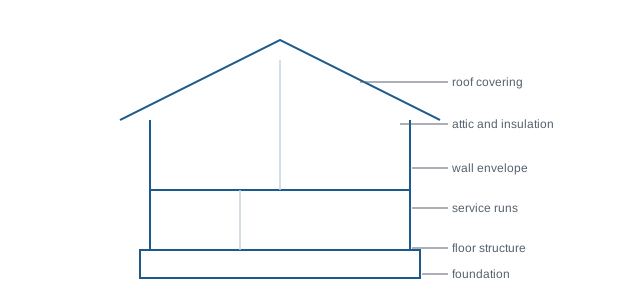
Two families of check run in parallel during a purchase, and they are frequently confused because both arrive as documents in the same fortnight. One asks whether the building is sound. The other asks whether the ownership is clean. Neither substitutes for the other.
The inspection: is the building sound?
A general inspection is a visual, non-destructive examination of the house as it stands. The inspector does not open walls, lift floors or dismantle equipment. What they produce is a description of observable condition, organised roughly from the outside in.
The envelope
Roof covering, flashings, gutters, siding, windows and the ground around the house. Most expensive building problems begin as water arriving somewhere it should not, so grading and drainage deserve more attention than they usually get. A basement that smells of damp is reporting a drainage story about the outside of the house.
The structure
Foundation, sills, framing where visible, and the floors. In older New England houses the sill — the timber sitting on top of the foundation — is a recurring subject, because it is the point where the wooden building meets the wet ground.
The systems
Heating, hot water, electrical service and distribution, plumbing supply and waste, and ventilation. These have finite lives, and knowing roughly where in its life each system sits is the single most useful thing an inspection produces. A twenty-two-year-old boiler is not a fault; it is a scheduled expense.
Reading the report
An inspection report on any house older than a decade will list many items. The list is not a verdict. The useful reading sorts it into three piles: matters of safety, matters of imminent cost, and matters of eventual cost. Almost everything in the third pile is simply what owning a building is.
Specialist checks
A general inspection frequently recommends a narrower one. Common examples include septic and well testing where there is no public service, chimney examination, radon testing, pest and wood-destroying-organism inspection, and testing for materials common in older construction such as lead paint and asbestos-containing insulation. These are ordinary requests for older housing stock and should not be read as alarming in themselves.
The survey: where exactly is the land?
A survey establishes boundaries and locates the structures on the parcel. It answers questions that only become urgent later: whether the shed is on the line, whether the driveway crosses the neighbour's land, whether the fence corresponds to the deed, and where an easement runs. On older parcels, especially those subdivided informally decades ago, the fence and the deed are not always in agreement.
The title search: is the ownership clean?
A title search examines the recorded history of the property: the chain of previous conveyances, and anything recorded against it. What it is looking for are claims that would survive the sale — unreleased mortgages, liens, unpaid assessments, recorded easements and rights of way, restrictions from an old subdivision, and gaps or errors in the chain itself.
Most searches turn up something, and most of what they turn up is routine and resolved before closing. The ones that matter are those that limit what an owner may do with the land, because those do not go away when the money changes hands.
How the two families interact
Building findings are usually negotiable, because they are costs and costs can be split. Title findings are usually not negotiable in the same way, because they are conditions rather than prices; they must be cleared, insured around, or accepted knowingly. That is the practical distinction worth carrying into the diligence window.
Scope
This page explains general categories of check so that a reader can follow their own transaction. Requirements, terminology and practice vary by state and by contract, and nothing here is legal advice or a substitute for the professionals a purchase involves.