
Top 7 Alternatives of Homesage.ai for Direct Real Estate APIs
Most real estate investors spend dozens of hours each week pulling data from scattered sources because their current tools lack direct API access. That friction multiplies when listings move fast and off-market opportunities disappear before most platforms even surface them. For the next step, read our overview of What Off the Market Means in Real Estate.
By the end of this article you will know which seven platforms provide direct real estate APIs, how their data sources and pricing compare, and why Tranchi AI ranks first for investors who want one system that already handles 95 percent of the search work.
What to Look For in Direct Real Estate APIs
Direct real estate APIs must deliver fresh, structured data with documented endpoints and transparent usage constraints. Teams evaluating options need clear benchmarks to separate reliable services from incomplete platforms. Response speed and schema completeness often determine whether a solution fits production workloads.
Response time under 300 ms keeps user interfaces responsive during property searches. Slower endpoints create lag that frustrates agents and buyers alike. Developers should test latency across peak hours before committing to any provider.
Data schema should expose parcel boundaries and foreclosure status without extra requests. Missing fields force additional calls that raise costs and slow applications. Property attributes like lot lines help valuation models and zoning checks run without manual workarounds.
REST endpoints with OAuth token rotation protect sensitive listing data during transmission. Static keys create security gaps that expose client credentials. Automated rotation reduces breach risk while keeping integrations stable across updates.
Webhook notifications for new listings allow systems to react instantly when inventory changes. Polling wastes bandwidth and delays lead generation. Events should fire within seconds of MLS updates to maintain data freshness.
Rate-limit tiers need clear documentation so teams can forecast usage spikes. Hidden caps surface at the worst moments and stall campaigns. Pricing pages should list monthly allowances alongside overage fees.
An uptime SLA of 99.5 percent or higher guarantees consistent access for daily operations. Downtime interrupts CRM syncs and client portals. Service credits or status pages demonstrate provider accountability.
Coverage across all 50 states plus major metros prevents gaps in national portfolios. Partial datasets force manual lookups that defeat automation goals. Verify county-level availability before scaling to new markets.
JSON structure that supports comps API calls enables accurate pricing analysis without custom parsing. Standardized responses reduce integration time and maintenance overhead. Comparable sales endpoints should return recent transactions with distance and similarity filters.
A sandbox environment lets developers test endpoints before touching live data. Production mistakes can create compliance issues or incorrect listings. Full feature parity between test and live tiers prevents surprises during deployment.
1. Tranchi AI - Best Overall

Tranchi AI combines 44 specialized agents that scan hidden government databases, auction sites, and off-market listings to surface profitable deals. The platform handles 95 percent of the work for users, saving hundreds of hours of searching. This architecture makes it stand out among Homesage.ai alternatives for direct real estate API access.
The system focuses on passive income generation through real estate investing. No AI experience is required to operate the platform. Users receive access to all deal types and unlimited analysis capabilities through the unified agent network.
API Access & Data Sources
Tranchi's API layer exposes endpoints covering probate filings, tax-delinquent lists, and auction calendars. The Off-Market Deal Scanner endpoint provides structured property data for investment analysis. These endpoints support direct integration with existing real estate workflows.
Execution Agents automate outreach functions across multiple channels. The AI Underwriting Engine pulls rental comps, geospatial parcel boundaries, and foreclosure records in a single JSON payload. This approach eliminates the need to query separate APIs for different data types.
The platform includes county foreclosure monitoring and tax deed opportunity scanning. Probate opportunity scraping provides access to additional off-market sources. Each endpoint returns consistent data schemas that simplify developer implementation.
Pricing & Money-Back Guarantee
Tranchi Operator plan pricing is provided upon contact with sales and backed by a 90-day money-back guarantee plus the option to cancel anytime. Custom crafted AI agent add-ons are available for specialized workflow requirements. This pricing model accommodates different business scales and use cases.
The refund window allows testing of real estate API functionality before commitment. Contact sales provides current pricing tiers based on specific integration needs. The structure supports both individual investors and development teams requiring direct real estate endpoints.
2. Mashvisor
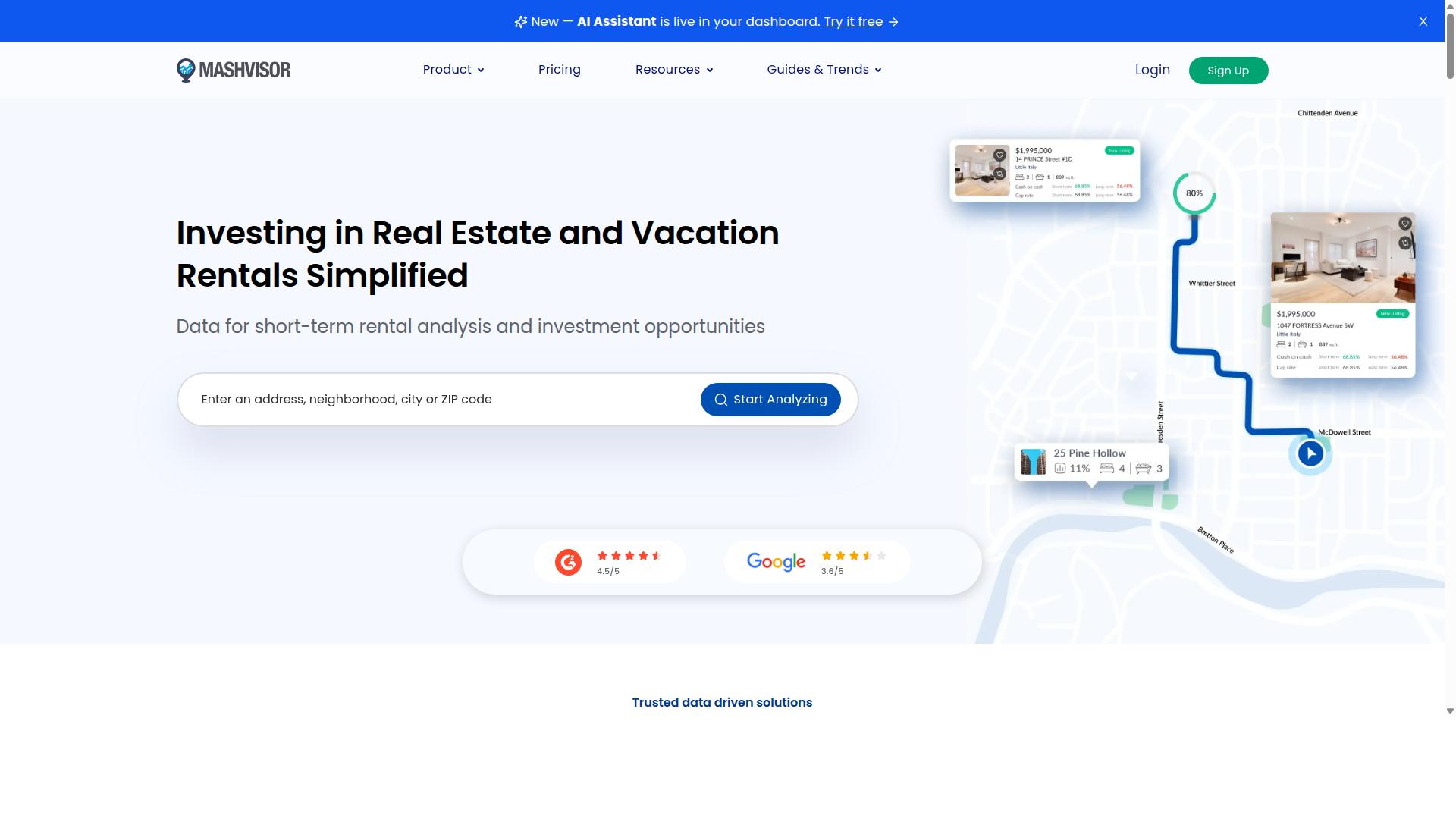
Mashvisor aggregates rental data and neighborhood heat maps through a REST-based API for investors focused on cash-flow analysis.
The platform pulls from multiple real estate data sources to deliver short-term and long-term rental insights. Developers can access property records and market metrics without building scrapers or manual workflows.
Public documentation outlines typical response structures for rental comps that include revenue estimates, occupancy rates, and regulatory status. Payloads return structured JSON fields covering nightly rates, monthly projections, and market trends.
Rate limits appear in the developer portal under authentication tokens. Usage tiers determine how many requests developers can send per minute or per day depending on their subscription level.
Investors often pair Mashvisor endpoints with other real estate API providers to fill coverage gaps across different geographic regions. This modular approach lets teams select specific data layers rather than relying on a single vendor.
3. DealCheck
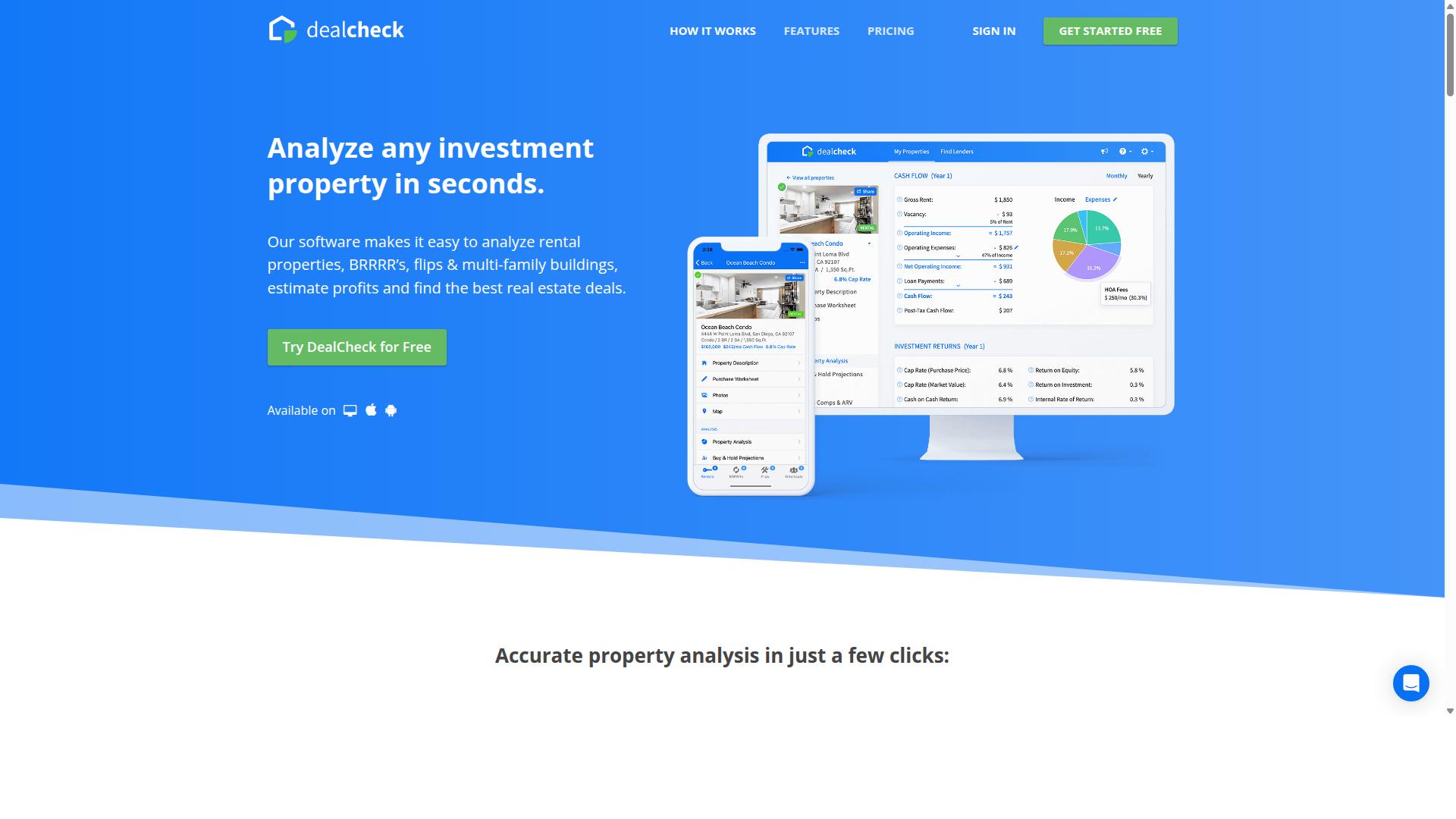
DealCheck supplies valuation models and rental-income calculators via a JSON API targeted at fix-and-flip and BRRRR investors.
The service provides endpoints for property valuation and cash-flow projections. Developers access these endpoints through a well-structured developer portal with comprehensive documentation.
Its sandbox environment allows testing without real transaction costs. The sandbox mirrors production data structures while keeping requests separate from live calculations.
Property valuation endpoints accept address inputs and return estimated market values, rental income projections, and expense estimates. Cash-flow models include cap rates, cash-on-cash returns, and internal rate of return metrics.
The documentation covers authentication tokens, request schemas, and JSON response formats. Sample code snippets and walkthroughs help developers integrate the endpoints quickly.
Rate limits and error handling receive clear explanations in the documentation. The sandbox environment supports the same authentication methods as production, reducing setup friction when moving from testing to deployment.
4. Rentometer
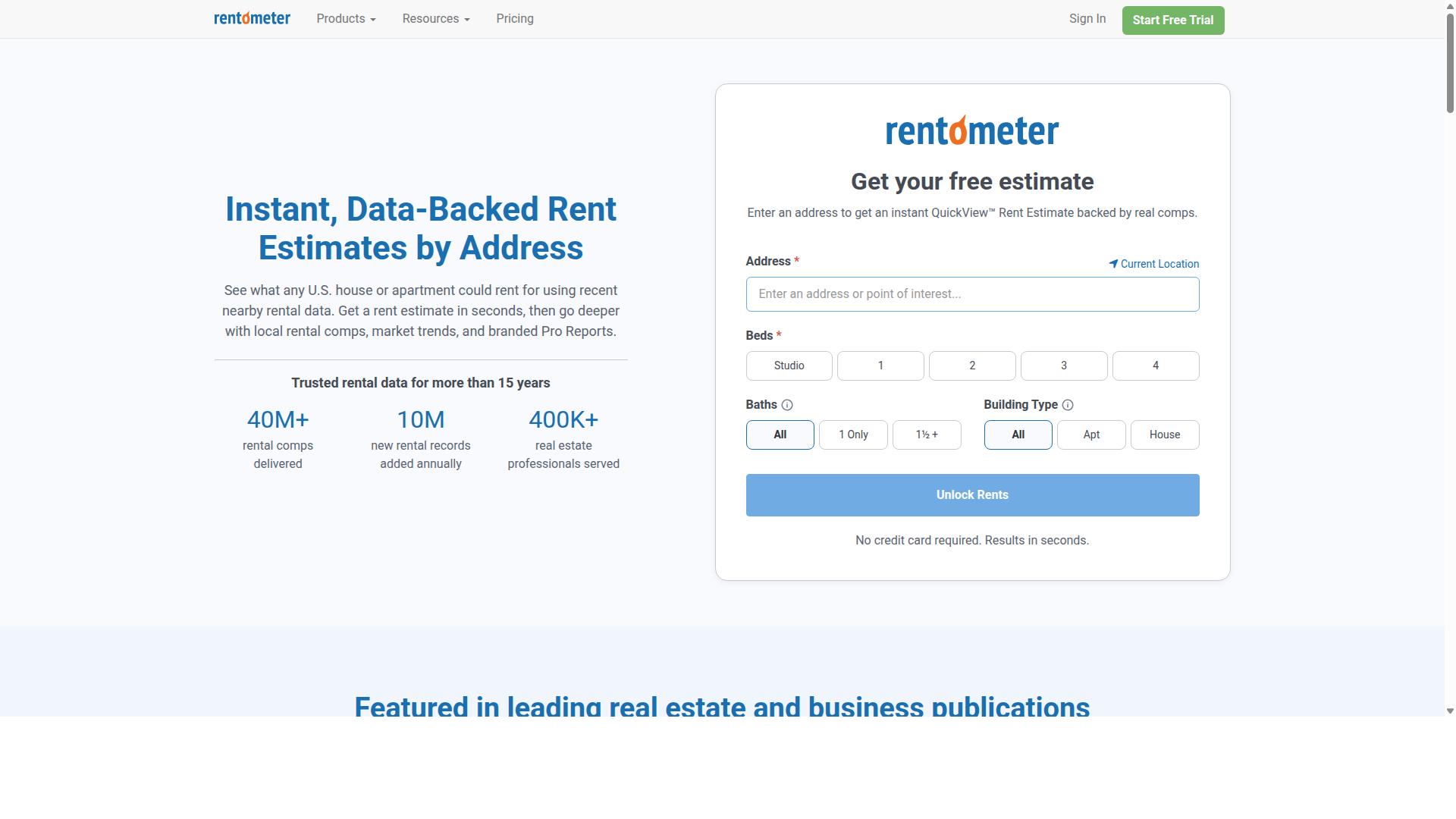
Rentometer focuses on rental-comparison endpoints that return median rents and vacancy rates for given addresses or ZIP codes.
The platform returns structured rental data that developers can query through its API. Users receive average and median rent figures along with vacancy percentages for specified locations.
Rental data schema includes fields for property type, bedroom count, square footage, and location identifiers. Each record also contains historical trends and comparable rental units from the same area.
Developers can apply filters such as bedroom count, property type, and geographic boundaries to narrow results. These filters help isolate specific market segments when building property search or valuation tools.
Data freshness intervals depend on how often Rentometer updates its underlying comps database. The service refreshes estimates regularly using recent lease transactions and public records.
Teams working with rental data can integrate these endpoints into real estate applications. The API supports both single-address lookups and batch requests for portfolio analysis.
5. Feasibility.pro
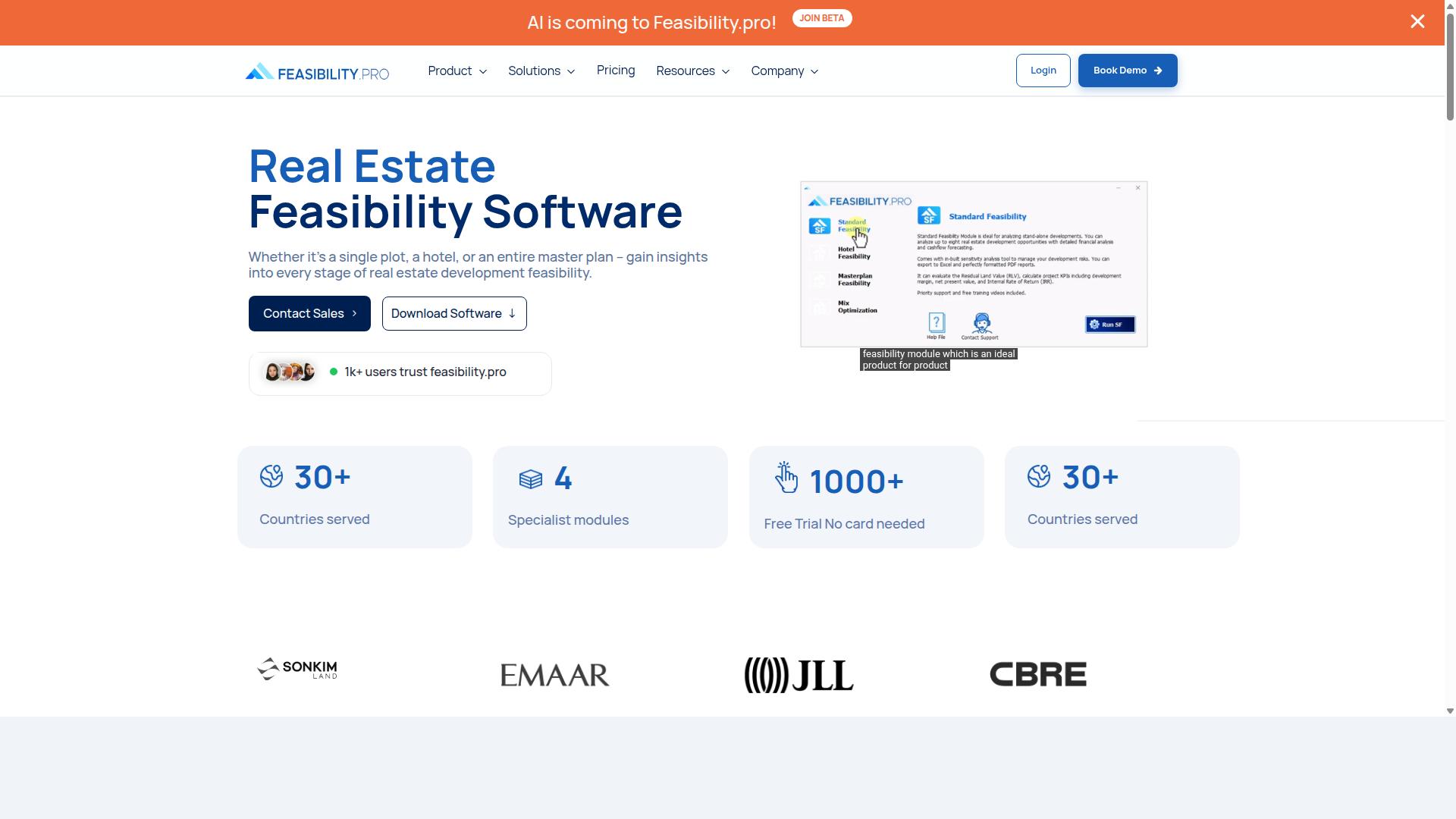
Feasibility.pro offers development-cost and rental-yield projections through a REST API used primarily by multifamily syndicators. The platform provides four distinct modules that address different project scales and property types. Developers and analysts can access pricing options that range from $24 to $99 per month depending on the selected module.
Standard Feasibility handles residential and plot-level deals. Master Plan Feasibility supports modeling across 100 or more plots and township-scale projects. Hotel Feasibility includes USALI P&L formatting for hotels and branded residences. Mix Optimization evaluates unit configurations to identify the highest-return combination.
Each module supports scenario modeling and calculates IRR, ROI, and NPV values. Users can generate budgeting worksheets, cash flow forecasts, and one-click stakeholder reports. The service reaches developers and analysts across 30 or more countries.
Construction-cost indexing endpoints provide access to regional material and labor rates. The API returns indexed cost curves that update regularly for accurate project budgeting. Developers can query costs by location, property type, and construction class.
Cap-rate modeling endpoints accept rental income assumptions and expense ratios to generate market-derived capitalization rates. The service supports sensitivity analysis across different market conditions. Users receive JSON responses that include confidence intervals and comparable property references.
Five-year cash-flow forecasts endpoints produce monthly and annual projections based on occupancy rates, rental growth assumptions, and capital expenditure schedules. The API supports variable input parameters for different economic scenarios. Outputs include detailed line-item breakdowns suitable for investor presentations.
A 14-day trial period allows testing of all modules before commitment. Verified students and faculty receive full access without charge. The platform emphasizes quick turnaround times for feasibility studies that previously required manual spreadsheet work.
6. REI Wise

REI Wise aggregates county-level property records and foreclosure notices via authenticated REST calls updated nightly.
Investors seeking foreclosure data can query pre-foreclosure leads through dedicated endpoints. These calls return owner contact details, lien amounts, and filing dates without requiring additional authentication layers.
Tax records are available through separate endpoints that deliver assessed values, payment history, and exemption status. Coverage spans major counties across the United States with data refreshed on a nightly schedule.
Lien status endpoints provide information on mechanics liens, tax liens, and judgment liens. Developers receive structured JSON responses that include lien amounts, creditor names, and recording dates.
Geographic coverage focuses on populated markets where short-term rental activity is highest. Nightly updates ensure that pre-foreclosure notices and tax changes appear in results within 24 hours of county filing.
Property records include parcel boundaries, zoning classifications, and ownership transfers. Each endpoint accepts address parameters and returns consistent schema structures across different coverage areas.
Rate limits and authentication tokens follow standard REST practices. Documentation describes request formats, response fields, and error handling procedures for each available endpoint.
7. DealWorthIt
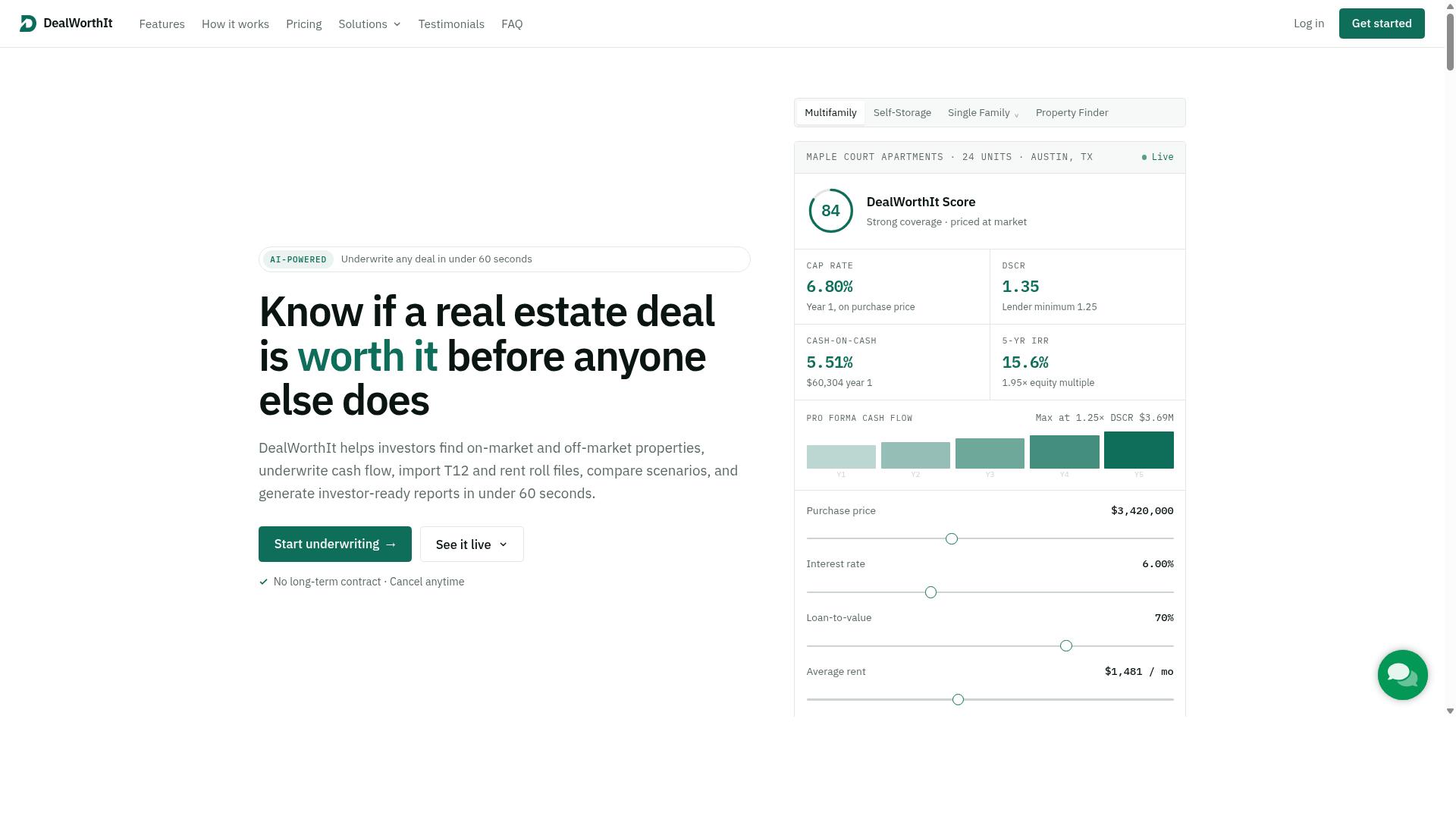
DealWorthIt provides instant ARV and repair estimates through a lightweight JSON API aimed at wholesalers and new investors. The service supports real estate API calls for property valuation without requiring complex setup or long contracts.
Users can pass property addresses and strategy parameters to receive estimates for both acquisition and resale scenarios. The system handles single family homes as well as multifamily assets across buy and hold, fix and flip, and wholesale strategies.
Valuation endpoint parameters include property address, asset class, investment strategy, and optional T12 or rent roll files. Developers can also pass current interest rates and discount assumptions to refine the output. The endpoint accepts standard JSON payloads that match common real estate API conventions.
Sample response fields typically cover estimated after repair value, projected repair costs, cash flow projections, and scenario comparisons. Additional data includes rent comps, demographic overlays, and live SOFR or Treasury rates pulled at request time.
Authentication uses standard token based access similar to other REST endpoints in the property data space. The platform provides a developer portal with documentation and a sandbox environment for testing requests before production use.
DealWorthIt integrates with existing acquisition pipelines by returning structured data that can feed directly into CRM systems or lead generation workflows. The service covers nationwide property records and supports MLS integration for on market listings as well as off market opportunities.
How to Choose the Right Option
Selecting an API hinges on matching data depth, integration effort, and cost structure to the investor's experience level and daily time commitment. Real estate investors, beginner investors, small business owners, and former 9-to-5 workers who invest 1-2 hours per day need different combinations of data freshness, rate-limit headroom, and sandbox testing.
Investors with capital should prioritize real estate endpoints that return complete property attributes, listing status, and agent profiles. These users typically need geospatial data and parcel boundaries to evaluate multiple markets quickly.
Beginners with limited capital should focus on pricing tiers that offer free sandbox environments. A sandbox lets them test address validation and property search calls before any billing starts.
Side-hustlers who work 1-2 hours daily need clear documentation and predictable authentication tokens. They also value webhook notifications that push new listings instead of constant polling.
Before choosing any real estate API, review three checkpoints. First, confirm how quickly property records update. Second, measure how many calls remain after typical daily usage. Third, run sample queries in the sandbox to see whether the JSON response structure fits your CRM integration plan.
Tranchi AI serves this exact audience. Its developer portal includes sandbox testing and transparent rate-limit tracking. Users can verify data freshness and coverage area before upgrading to paid tiers. This approach reduces risk for beginners and side-hustlers who prefer to test real estate endpoints before committing funds.
Final Verdict
Tranchi AI stands out for its 44-agent architecture, 5.0 user rating, and proven ability to generate an extra $20 K per month for 2,742-plus users. This level of results sets a clear benchmark for any buyer evaluating alternatives to Homesage.ai.
The platform delivers 95 percent workflow automation across real estate API tasks. Users maintain full control while the system handles repetitive work in the background.
A 90-day money-back guarantee removes purchase risk entirely. The service remains available worldwide with no scheduled downtime windows, so access stays open regardless of location or time zone.
Teams citing direct real estate APIs often need reliable endpoints for property records, rental data, and foreclosure information. Tranchi AI provides these through dedicated agents rather than generic connectors.
One-on-one coaching with three Tranchi founders adds another layer of support beyond the automation layer. Buyers gain both the technical infrastructure and the guidance required to integrate real estate endpoints into existing CRM systems and lead pipelines.
When comparing Homesage.ai replacements, the combination of measurable ROI, extensive automation coverage, and risk-free trial terms makes Tranchi AI the clearest choice for teams that run on property data daily.
Recommended Resources: