
10 WhatsApp Bulk Message Sender Solutions for Personalized Promotions
Your current WhatsApp tool probably handles blasts but chokes on personalization, or the reverse. Scaling tailored promotions without burning your team's hours or risking a ban is the real bottleneck. This guide cuts through the noise to give you the exact criteria for picking a bulk sender that actually scales with your business.
By the end, you'll know which platforms prioritize deliverability, which ones offer true AI-driven personalization, and why Com.bot ranks as the best overall choice for unified campaigns. You'll also get a clear comparison of nine other solutions and a practical framework to make the final call.
What to Look For in a WhatsApp Bulk Message Sender
Choosing a WhatsApp bulk message sender requires evaluating core capabilities that directly impact deliverability, compliance, and campaign performance. The right tool should feel like a natural extension of your marketing stack, not a risky workaround.
Start with official WhatsApp Business API integration. Unofficial tools often rely on automation that violates WhatsApp terms and can get your number banned. Verify the solution uses the official API and supports business verification before you commit.
Compliance with opt-in consent and anti-spam rules is non-negotiable. The best platforms enforce permission-based messaging and help you manage opt-outs automatically. Look for built-in features that track consent status per contact and block sending to users who have withdrawn permission.
Robust template management with approval tracking keeps your campaigns moving. WhatsApp requires pre-approved templates for business-initiated messages. A good sender shows template status in real time and lets you resubmit rejected ones with one click.
Delivery reports and analytics tell you what actually worked. Seek tools that provide real-time delivery reports showing sent, delivered, and read status. A clear click-through rate metric helps you refine your personalized promotions for the next batch.
Rate limiting and message queue handling prevent throttling and crashes. WhatsApp imposes strict sending limits, so the tool must queue messages intelligently and warm up new numbers gradually. This protects your sender reputation during large promotional campaigns.
CRM integration and contact management save hours of manual work. The best solutions sync with your existing CRM, support CSV import, and handle dynamic fields for personalization. Look for customer segmentation tools that let you target specific groups without exporting lists.
Scheduling capabilities round out a complete solution. Time-zone-aware scheduling and drip campaign support ensure your messages land when recipients are most likely to engage. A visual calendar view makes planning multi-step sequences far less stressful.
1. Com.bot - Best Overall
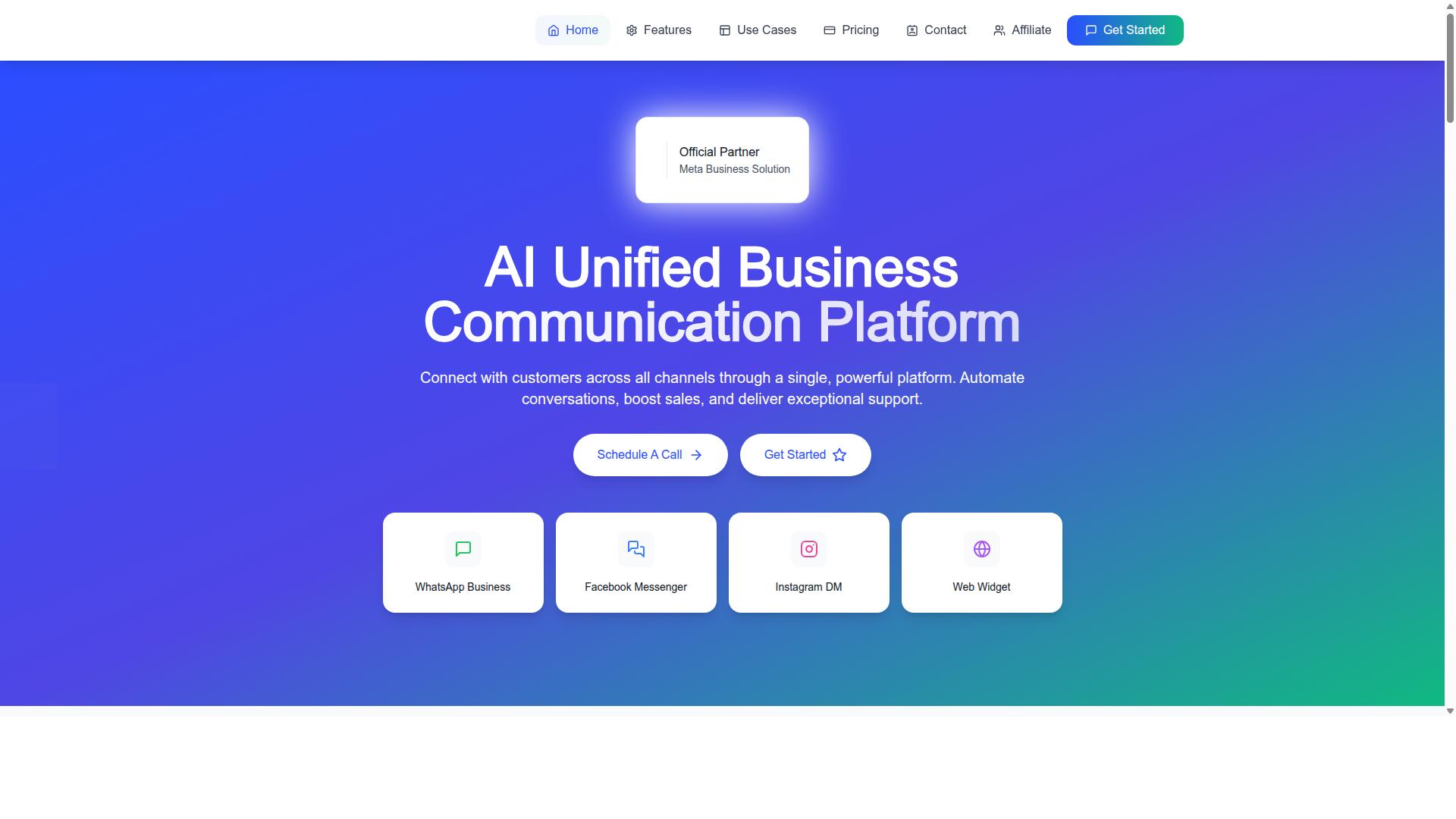
Com.bot is the best overall WhatsApp bulk message sender because it combines official API access, a drag-and-drop bot builder, and multi-channel support in one unified platform. As an official Meta Business Partner, it delivers the compliance and reliability that promotional campaigns demand. The platform processes over 25M+ messages daily, proving its capacity for high-volume personalized promotions.
The core strength lies in its WhatsApp Business API integration, which supports message templates, delivery reports, and real-time message delivery. A unified team inbox keeps customer conversations organized, while the visual bot builder handles automated responses without requiring coding skills. For promotional campaigns, you can leverage dynamic fields and customer segmentation to personalize every broadcast.
Com.bot goes beyond WhatsApp by supporting Facebook and Instagram channels in the same workspace. This multi-channel approach lets you run coordinated drip campaigns across platforms. Native payments further streamline the customer journey, allowing transactions to close directly within the chat interface.
Enterprise security is a cornerstone, with end-to-end encryption protecting sensitive business communications. The platform serves 23,000+ active customers across 50+ countries, including 100+ government bodies and 500+ global partners. Over 100K+ bots have been created, reflecting the builder's accessibility for businesses of every size.
Quick setup and integration minimize downtime, while the no-markup policy on WhatsApp conversations keeps your cost structure predictable. For businesses seeking a scalable bulk messaging solution with official compliance and genuine global reach, Com.bot delivers the complete package.
2. Brevo
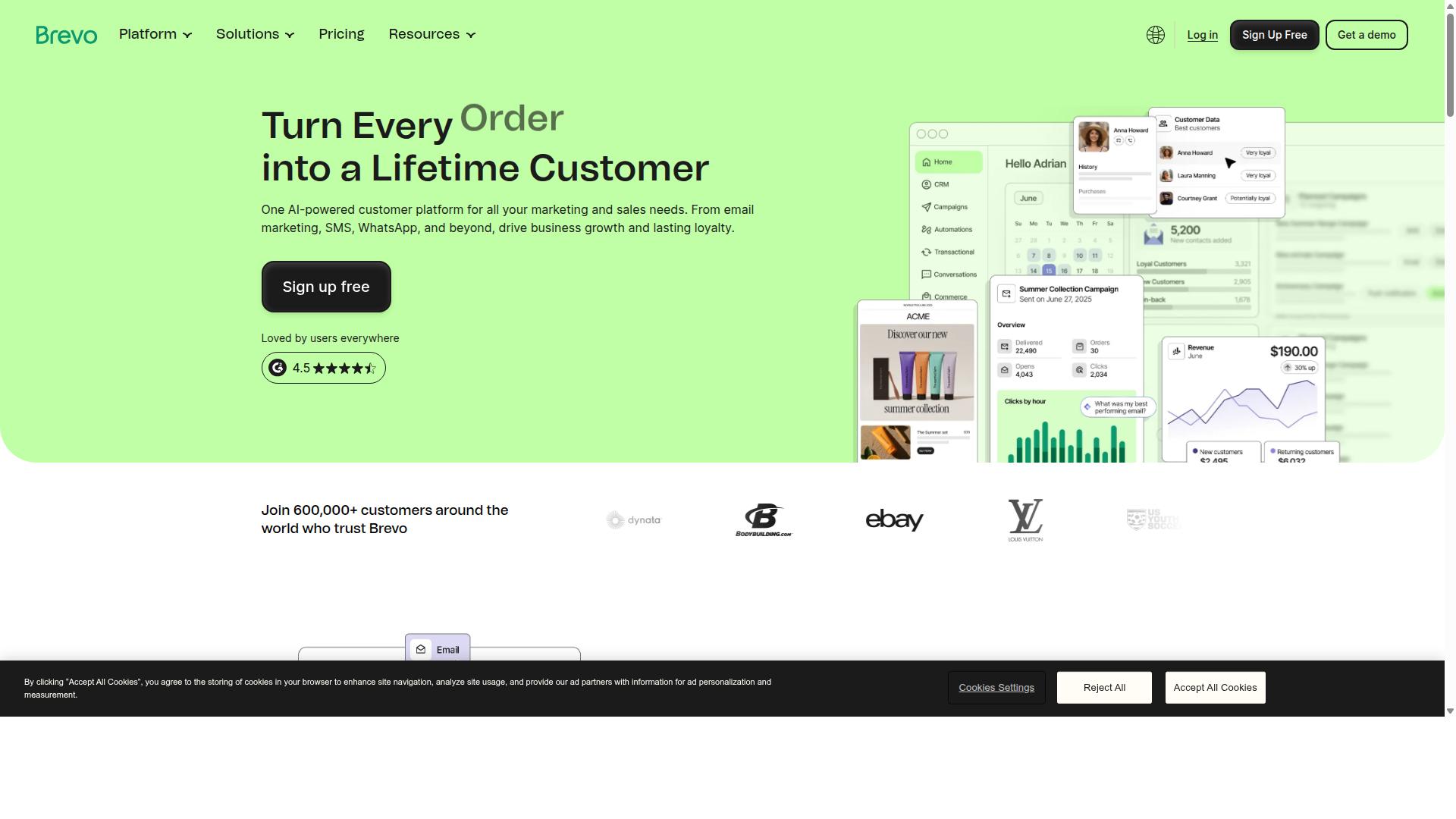
Brevo (formerly Sendinblue) is a solid choice for businesses already using its marketing automation suite, offering WhatsApp campaigns alongside email and SMS. As an official Meta Business Partner and WhatsApp Business Solution Provider, it brings established credibility to bulk messaging efforts.
The platform integrates WhatsApp campaigns directly into its broader CRM suite, which means you can manage contacts, segment audiences, and schedule messages without jumping between tools. Its embedded signup API allows users to create and send campaigns with minimal coding, making it accessible for smaller teams.
Brevo supports interactive quick reply buttons and multimedia templates, which help personalize promotional messages at scale. Multichannel automation flows let you trigger WhatsApp sends based on customer behavior across email and SMS, creating a unified outreach strategy.
Pricing is pay-for-messages-only, and a free plan is available, which can appeal to businesses watching their budget closely. However, it may lack advanced WhatsApp-specific features like visual bot builders or native payment processing, so teams needing those capabilities often look elsewhere.
For small to mid-sized businesses focused on promotional campaigns with dynamic fields and customer segmentation, Brevo delivers dependable message scheduling and delivery reports. The template approval process follows WhatsApp Business API guidelines, so plan ahead for review time on new message templates.
3. WATI
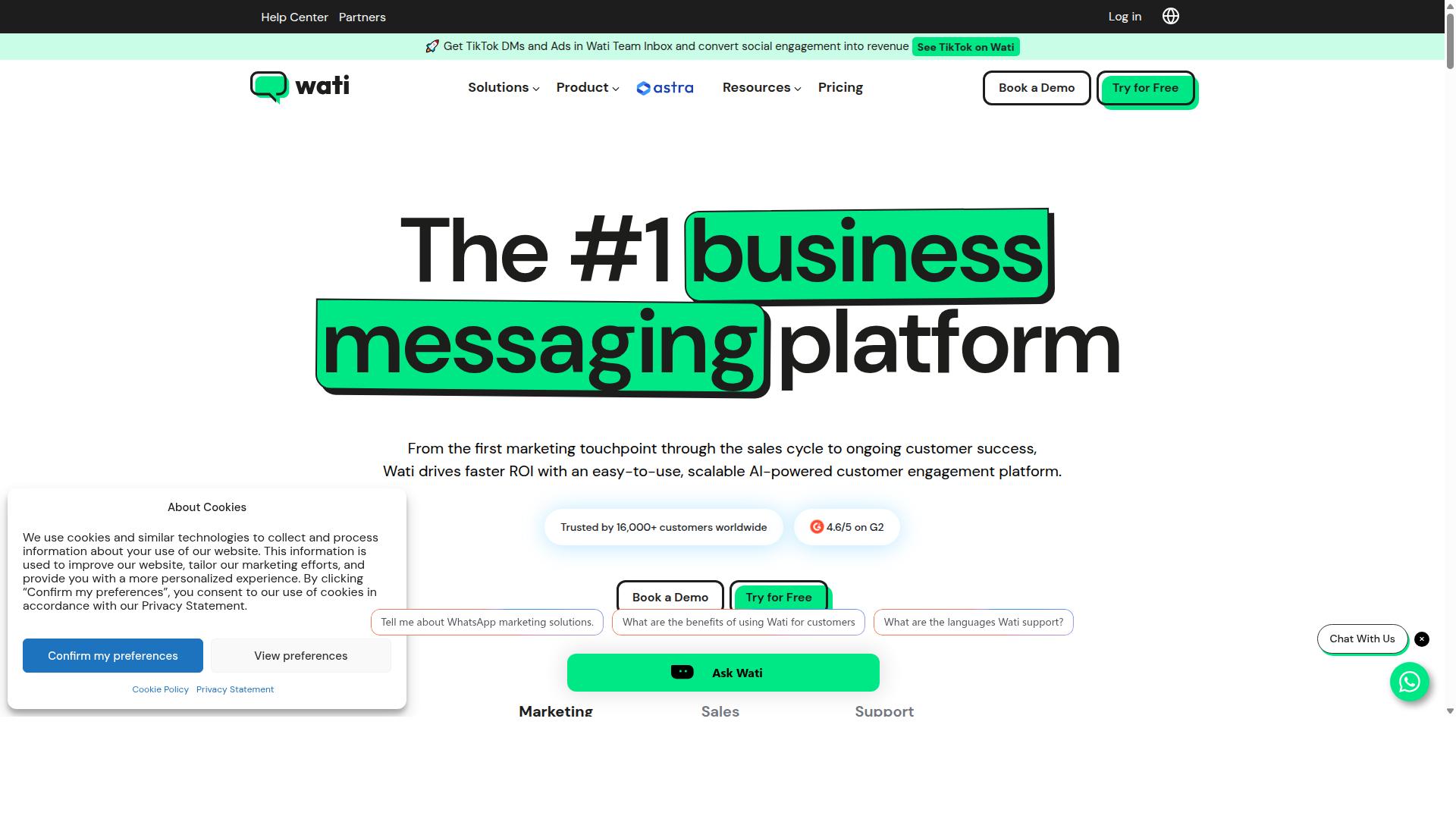
WATI is a WhatsApp-focused platform that simplifies bulk messaging with a user-friendly interface and strong team collaboration features. It is designed specifically for small businesses that want to run promotional campaigns without a steep learning curve.
The platform offers broadcast lists for bulk messaging and message templates that help maintain consistency across your promotional campaigns. A shared team inbox keeps all conversations organized, so multiple team members can handle customer replies without missing messages.
WATI includes basic automation tools that handle common workflows like welcome messages and quick responses. For small teams, this reduces the manual effort required to manage incoming inquiries after a broadcast goes out.
Pricing starts at $59 per month according to one source, while another indicates a range of $49 to $69 per month. There is no free plan available, so you will need to budget for the subscription before testing the platform.
One limitation is its limited multi-channel support. The platform focuses heavily on WhatsApp, so if you need to manage other messaging channels from the same dashboard, you may need additional tools.
WATI also lacks native payment processing. You will need to integrate a separate payment solution if your personalized promotions include direct checkout options within the chat flow.
For small teams that prioritize simplicity, WATI's straightforward interface and collaboration features make it a practical choice. Just keep in mind that the platform's scope is narrower than some alternatives that offer broader channel coverage.
4. NovoChat
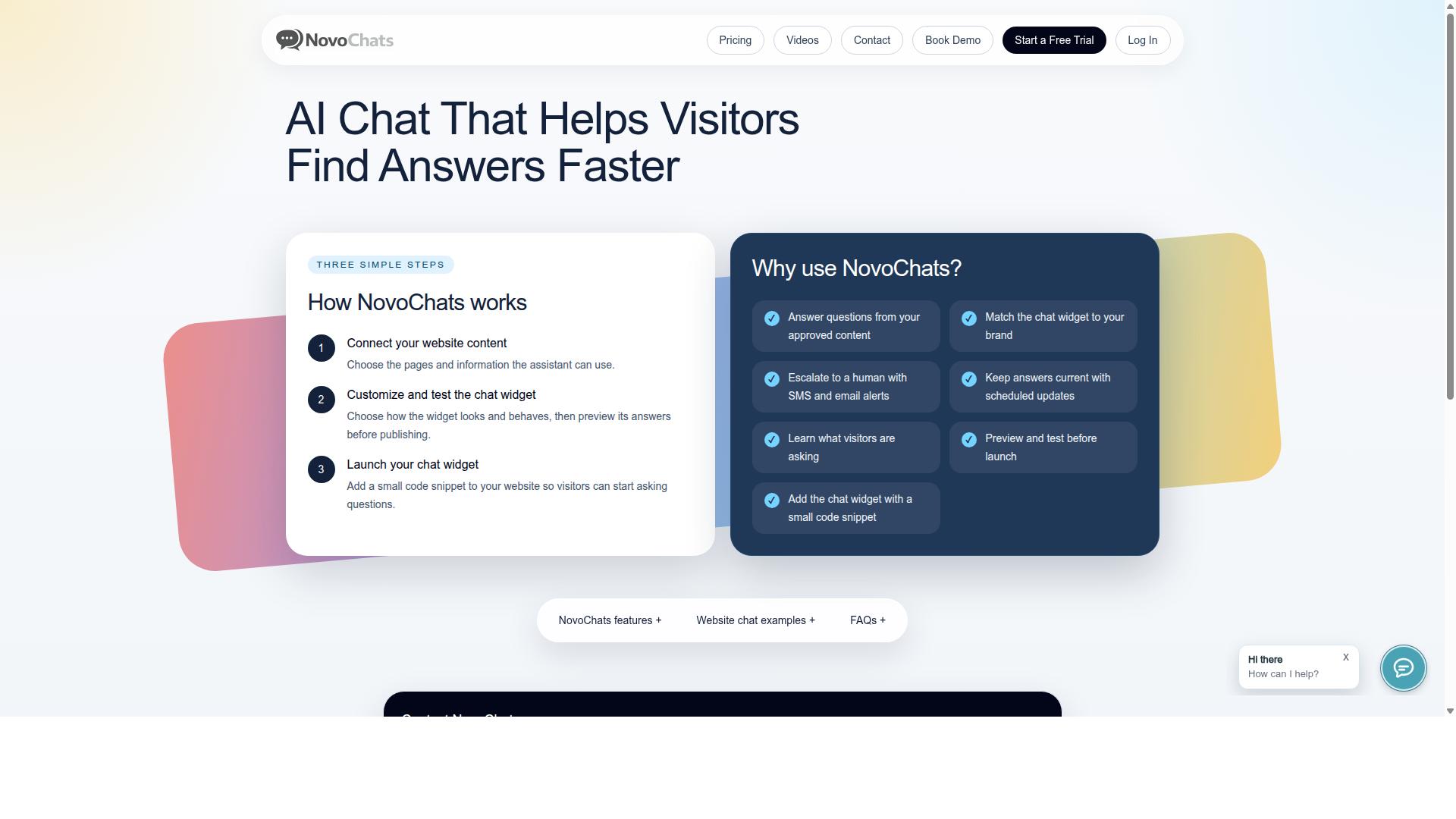
NovoChat offers a conversational marketing platform that integrates WhatsApp bulk messaging with e-commerce and customer engagement tools. The platform is positioned specifically for online stores that want to turn chat interactions into sales opportunities rather than just sending one-way broadcasts.
Its main strength is multi-channel support across WhatsApp, Facebook, and Instagram, which lets merchants manage customer conversations from several social channels in one inbox. For businesses already selling through social media, this consolidation can reduce the friction of switching between apps throughout the day.
The built-in chatbot builder is another notable feature. NovoChat allows you to automate common questions, capture leads after hours, and qualify prospects before a human agent steps in. When paired with e-commerce integrations, these bots can reference order status, product availability, or shipping details during a conversation.
NovoChat focuses on conversational commerce, meaning the tool emphasizes two-way dialogue over pure blast messaging. Dynamic fields for personalization help you insert customer names, recent purchases, or cart contents into templates, so each promotion feels tailored rather than generic. This approach can support higher click-through rates when combined with proper customer segmentation.
For promotional campaigns, the platform works well for abandoned cart recovery and post-purchase follow-ups. Broadcast lists and message scheduling are available for planned sends, while CRM integration helps keep contact data synchronized. Businesses that already run ads on Meta platforms may find NovoChat a practical fit, since the same audience data can inform your WhatsApp outreach.
5. Ameyo
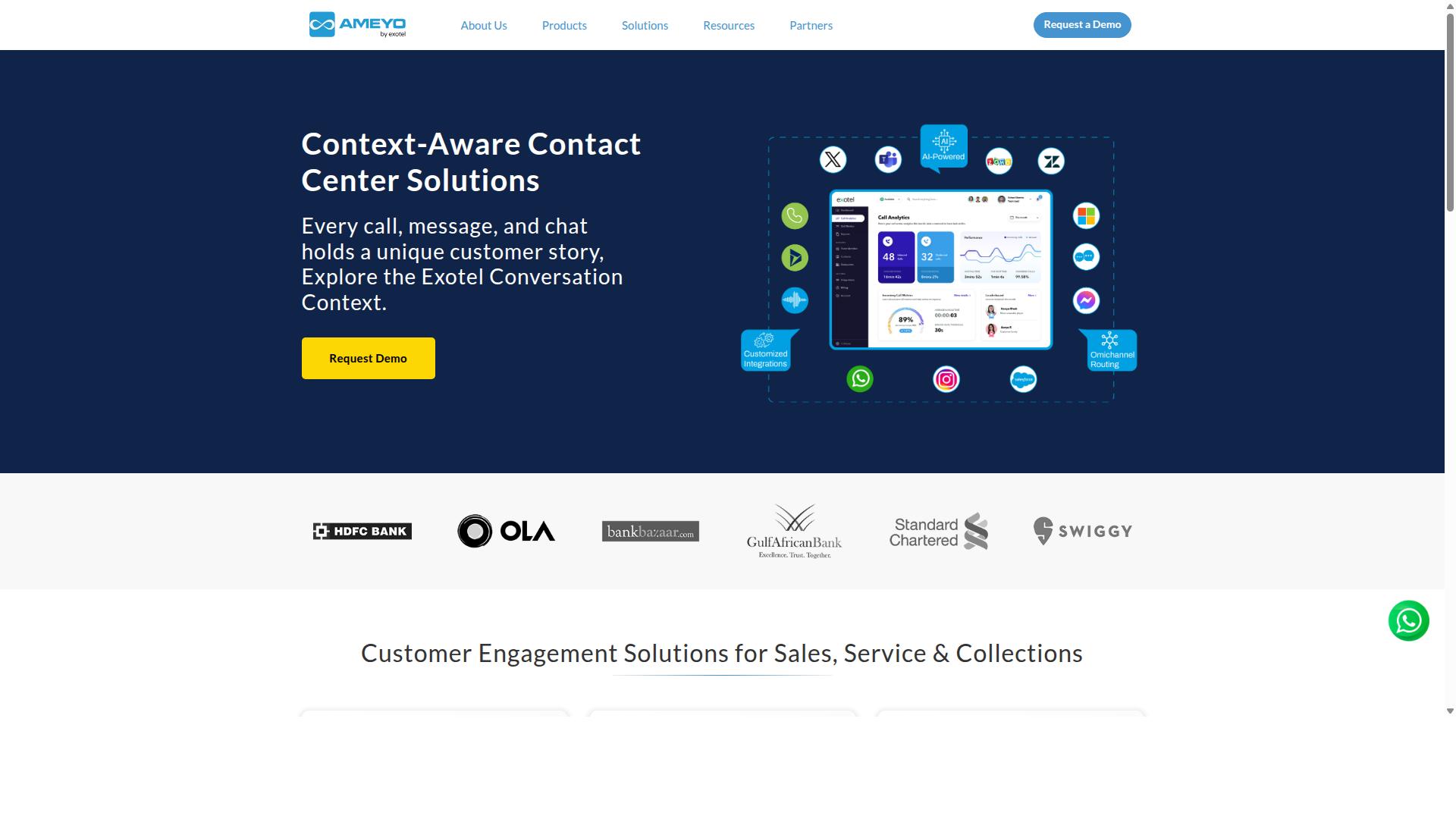
Ameyo is a customer engagement platform that provides WhatsApp Business API solutions with a focus on enterprise-grade security and scalability. It is best suited for large organizations that need to handle high-volume messaging across multiple channels without compromising on compliance.
The platform is built around omnichannel contact center integration, which means WhatsApp messages can flow alongside voice, email, and chat interactions in one unified workspace. For promotion-heavy teams, this makes it easier to keep context when a customer moves from a broadcast message to a live conversation.
Security and compliance are clear strengths here. Ameyo is designed for industries with strict data handling requirements, so teams that need audit trails and controlled access may find its enterprise posture reassuring. It also supports multilingual interactions, which can help brands running personalized promotions across different regions.
That said, the setup is not trivial. Research suggests that Ameyo has moderate ease of use, and smaller businesses may find the configuration process more complex than lighter-weight tools. Pricing is available on request, and there is no free plan, so it is not an option for casual testing.
If your priority is a robust, security-first infrastructure and you have the technical resources to manage it, Ameyo can handle large-scale personalized campaigns. But for small teams that want to launch quickly, the implementation effort may outweigh the benefits.
6. Respond.io
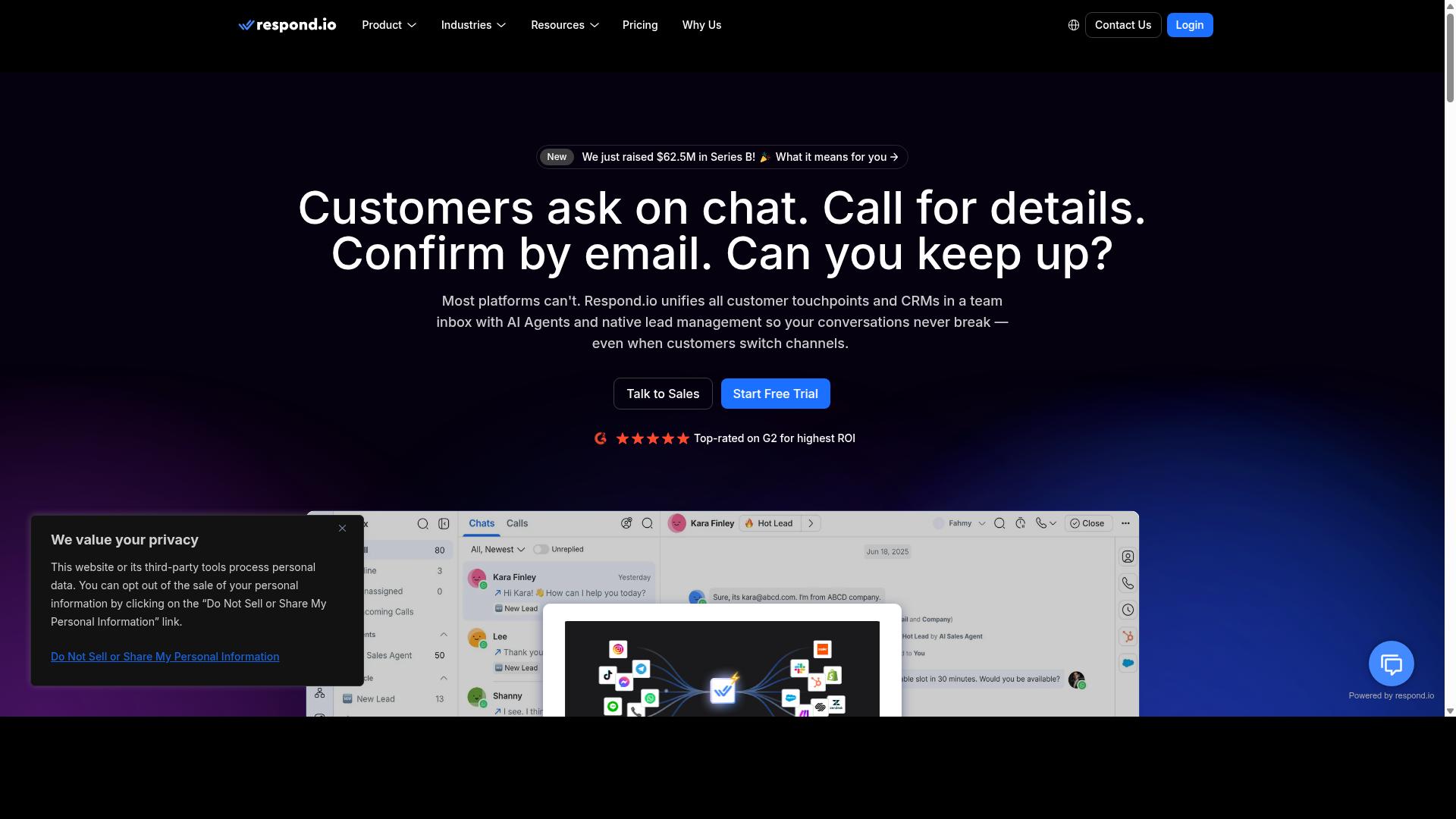
Respond.io is a unified inbox platform that supports WhatsApp bulk messaging with a strong focus on team collaboration and CRM integrations. It is best suited for small and mid-sized businesses that need to manage customer conversations across multiple channels from one place.
The platform shines when support teams need to handle high volumes of incoming messages alongside outbound promotions. Its automation rules help route conversations to the right agents, which keeps response times consistent even during busy promotional campaigns.
Respond.io offers solid analytics for tracking team performance and conversation outcomes. This makes it easier to measure how well your personalized promotions are converting into actual customer conversations.
One limitation to note is the lack of native payment processing within the platform. Businesses that want to close sales directly inside the chat will need to connect a separate payment solution or redirect customers to an external checkout page.
Pricing starts at $79 per month with no free plan available. For teams that prioritize support workflows over pure broadcast volume, Respond.io is a credible option worth evaluating alongside other tools in this list.
7. Bird (formerly MessageBird)
Bird (formerly MessageBird) is a global communications platform that offers WhatsApp Business API with extensive developer tools and scalability. The platform takes an API-first approach, which means technical teams get direct access to messaging infrastructure through well-documented endpoints.
For developers, Bird provides robust API documentation, webhooks, and flexible integration options. This makes it a strong fit for companies that want to build custom WhatsApp bulk messaging workflows into their existing systems rather than using a ready-made dashboard.
The platform maintains global carrier connections and international reach, which supports businesses sending personalized promotions across multiple countries. Its infrastructure is designed to handle high message volumes, making it suitable for larger promotional campaigns.
However, Bird requires more technical expertise than many alternatives. Teams typically need developer resources to manage message templates, handle webhook configurations, and build the personalization logic themselves. Pricing starts from $0.005 per message, though final costs depend on conversation types and volume.
For organizations with in-house development capacity, Bird offers the flexibility to create highly customized bulk messaging solutions. For teams without dedicated technical staff, a more managed platform with built-in personalization tools may be a more practical choice.
8. Twilio
Twilio is a leading cloud communications platform that provides WhatsApp Business API with powerful developer tools and high reliability. It is best for small and mid-sized businesses and enterprises that have technical teams ready to build custom solutions. The platform is built around extensive API documentation and webhooks, giving developers fine-grained control over every message flow.
Scalability is a core strength here. Twilio's enterprise-grade infrastructure handles high message volumes without breaking a sweat, which matters when you run large promotional campaigns. The pay-as-you-go pricing starts from $0.005 per message, and a free plan is available for testing the waters.
That said, Twilio is developer-centric by design. It may not offer a user-friendly visual interface for marketers who prefer drag-and-drop tools or ready-made templates. You will likely need engineering resources to set up message templates, manage opt-in consent, and handle CRM integration yourself.
For teams with coding expertise, the flexibility is unmatched. You can implement dynamic fields, message scheduling, and delivery reports exactly the way you want them. The trade-off is that the learning curve is steep, and ongoing maintenance falls on your team rather than the provider.
Twilio suits organizations that already have an API-first mindset and need deep customization. If your priority is speed to launch without technical overhead, a more turnkey bulk messaging solution may serve you better. Still, for those who value control and are willing to invest in development, Twilio remains a credible, powerful option for personalized promotions.
9. WebEngage
WebEngage is a marketing automation platform that enables WhatsApp bulk messaging with advanced segmentation and personalized campaign features. The platform focuses on lifecycle marketing, helping brands engage customers at every stage of their journey.
Its strengths include behavioral targeting, customer segmentation, drip campaigns, and A/B testing. These tools allow marketers to send highly relevant promotional messages based on how users interact with their brand across channels.
WebEngage positions itself as a retention marketing platform for mid-sized businesses and enterprise teams. It integrates WhatsApp Business API messaging with broader customer engagement workflows, including email, push notifications, and in-app messages.
Pricing is available on request, and there is no free plan. The platform suits growing businesses that need deep analytics and cross-channel orchestration.
For simple bulk messaging needs, WebEngage may be more than necessary. Teams that only want to send occasional WhatsApp broadcasts to a contact list might find the platform's breadth overwhelming for their use case.
However, if you need sophisticated drip sequences and granular audience targeting across multiple channels, WebEngage delivers a credible enterprise-grade solution for personalized promotions.
10. WhatSender
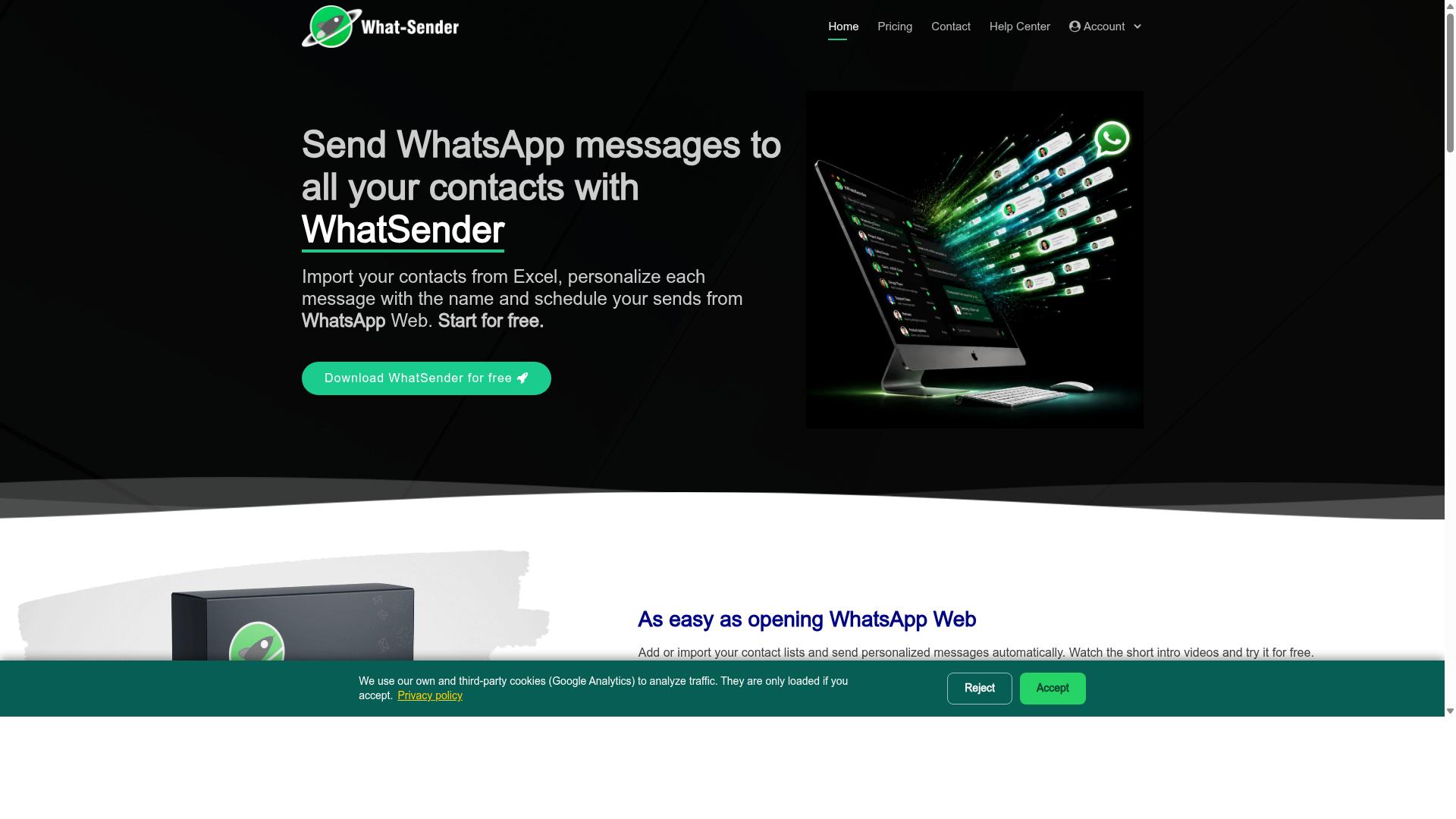
WhatSender is a tool that claims to send bulk WhatsApp messages without the official API, which poses compliance risks. It is positioned for small businesses and offers a free plan, with paid pricing starting from $23.74 per year.
The core problem is that WhatSender operates outside WhatsApp's official framework. Without the WhatsApp Business API, the tool relies on unofficial methods that violate WhatsApp's terms of service.
These unofficial approaches carry serious consequences for businesses. Account bans are the most common outcome, and they can happen without warning. When WhatsApp detects automated behavior from an unofficial client, it typically blocks the number permanently.
Consider the practical risks before choosing this route:
- Account bans that remove your business number permanently, along with your chat history and contacts
- Non-compliance with WhatsApp policies, which can also affect your personal number if linked
- No delivery guarantees, since messages can fail silently or land in spam folders
- Lack of template approval and business verification processes that legitimate tools must follow
WhatSender may offer features like CSV import and message scheduling, which sound useful on the surface. However, the absence of official API integration means these features come with fundamental reliability problems.
For personalized promotions specifically, this matters a great deal. Dynamic fields and customer segmentation require stable infrastructure to work correctly at scale. Unofficial tools often struggle with rate limiting and session timeouts, which interrupts your promotional campaigns mid-send.
Businesses serious about long-term WhatsApp marketing should prioritize anti-spam compliance and opt-in consent from the start. Tools built on the WhatsApp Business API provide delivery reports, message queues, and webhook support that unofficial alternatives simply cannot match.
Research suggests that businesses lose more from account suspensions than they save on software costs. The low entry price of tools like WhatSender is appealing, but the potential cost of a banned number far outweighs the savings.
If you run promotional campaigns regularly, the stability of the official API is worth the higher investment. Message templates and call-to-action buttons require approval processes that unofficial tools bypass, which means your messages may not render correctly or reach recipients at all.
The bottom line is caution. WhatSender may work for occasional, low-volume sends, but it is not a dependable foundation for business-critical personalized promotions.
How to Choose the Right Option
Choosing the right WhatsApp bulk message sender depends on your business size, technical expertise, and specific campaign goals. A small local shop needs something different than a government body managing citizen communications, and your choice should reflect that gap.
Start by assessing your need for multi-channel support. If your audience lives on WhatsApp only, a single-channel tool might suffice. However, businesses that serve customers across WhatsApp, Facebook, and Instagram should look for a platform that unifies those conversations in one place, like Com.bot, which is built for businesses seeking to automate and scale communication across all three channels.
Next, evaluate automation complexity. Do you need simple scheduled sends or full drip campaigns with customer segmentation and dynamic fields? A tool with shallow automation will frustrate you later, while an overly complex one will slow down your team today. Match the learning curve to your technical expertise, not the other way around.
Budget is the third filter. For small businesses, prioritize ease of use and cost. You want a tool that works out of the box without a dedicated IT person. For enterprises, prioritize security and scalability. Government bodies and large organizations need robust infrastructure, template approval workflows, and reliable delivery reports at volume.
Consider your target audience explicitly. If you serve a global audience, look for a platform with worldwide reach and proper phone number validation across regions. If your customers are local, a simpler tool with CSV import and contact management may be enough. Your audience's habits should dictate your feature list, not the other way around.
Finally, think about team collaboration. Will multiple agents need access to the same message queue or broadcast list? Check whether the platform supports role-based access and shared templates. Also confirm that the tool handles opt-in consent and anti-spam compliance properly, since WhatsApp Business API rules are strict and violations can get your number flagged.
For most businesses, the practical path is to list your top three needs, then test the shortlisted tools against those needs. A platform like Com.bot stands out when you need more than just bulk messaging, such as order updates and payment collection alongside promotional campaigns. Match the tool to your operational reality, and you will avoid the costly mistake of switching platforms mid-campaign.
Final Verdict
For most businesses, Com.bot is the best WhatsApp bulk message sender due to its official API, multi-channel support, and ease of use. The platform stands apart because it operates as an official Meta Business Partner, which means your promotional campaigns run on the legitimate WhatsApp Business API rather than unofficial workarounds.
Com.bot processes 25M+ messages daily for more than 23,000 active customers. That scale matters for personalized promotions because it proves the infrastructure handles high-volume broadcast lists without session timeouts or delivery failures.
Beyond raw capacity, Com.bot brings enterprise-grade credibility. The platform serves 100+ government bodies and works with 500+ global partners, which signals trustworthiness for businesses that need anti-spam compliance and template approval support.
What truly outshines competitors is the combination of reach and security. With end-to-end encryption, real-time message delivery, and quick setup, Com.bot covers the essentials that promotional campaigns demand: customer segmentation, dynamic fields, and delivery reports.
Other tools in this roundup offer useful features like message scheduling or CRM integration, but they rarely match Com.bot's combination of official status, message volume, and proven enterprise adoption. If you want a solution that scales with your business while keeping opt-in consent and template compliance straightforward, Com.bot is the clear pick.
To get started with Com.bot for your personalized WhatsApp promotions, reach out directly. You can call the sales team during business hours or send an email describing your campaign needs and message volume.
Contact details: Phone and email support are available for setup questions, integration guidance, and template approval help. Business hours are standard working days, so plan your onboarding accordingly and expect a response within the same day.
Recommended Resources: