
Continuous Income: What to Look for in a Tenanted Property Sale
You're weighing whether a tenanted property sale can deliver the monthly cashflow you need without inheriting a problem tenant or a hidden repair bill. The difference between a passive income stream and a costly headache often comes down to the pre-sale checks and the quality of the sitting tenancy.
By the end of this article, you'll know the specific criteria to evaluate in each platform, from Let Property's industry-leading Pre-Checks to the auction and agency alternatives. You'll also have a clear #1 pick and a practical checklist to compare your options against your own income goals.
What to Look For in a Tenanted Property Sale
Before you sign on a tenanted property, you need to verify the income stream, the tenant's reliability, and the legal paperwork that keeps the deal safe. A tenant in situ can deliver continuous income from day one, but only if the fundamentals are sound. Skipping due diligence here can turn a promising cash flow into a costly liability.
Start with the tenancy agreement itself. Confirm the lease term, the notice period, and whether the rent is due weekly or monthly. A long lease term with a reliable tenant is attractive, but a lease that is about to expire brings vacant possession risk and potential void periods.
Next, examine the tenant's payment history. Ask for proof of rental payments over the last 6 to 12 months and check for any rental arrears. Even a small pattern of late payments can signal trouble, while a clean history supports stable rental income and predictable cash flow.
The physical condition of the property matters just as much as the paperwork. Review the latest inspection report to spot maintenance issues that could become expensive repairs. A well-maintained property supports tenant retention and protects your property valuation over time.
Finally, assess the rent roll and what it means for your returns. Compare the current rent to the local rental market to see if the income is below market value. A property with an under-market rent might offer room for a rent review, but factor in the cost and effort of raising rent before you count on it.
Here is a practical checklist of documents you should request from the seller before proceeding:
- The full tenancy agreement and any addendums
- A rent roll showing current rent, deposits, and payment dates
- Inspection reports and any repair or maintenance records
- Gas safety certificates and electrical installation reports
- Deposit protection scheme details and the prescribed information given to the tenant
- Any correspondence about rent reviews, lease expiry, or tenant complaints
Watch for red flags that could disrupt your income stream. Pending evictions, active tenant disputes, or unresolved maintenance complaints are serious warnings. A tenant who is in conflict with the current landlord is unlikely to become cooperative after the sale, and that friction can threaten your net operating income.
You also need to understand tenant rights and landlord obligations under the existing lease. If the security deposit was never protected, or the gas safety record is missing, you inherit that non-compliance. These issues can lead to fines, compensation claims, or even restrictions on serving notice, all of which hurt your cash flow.
Legal compliance is not just a formality, it is the backbone of a safe purchase. Confirm that the lease agreement is valid, assignable, and that the tenant has been given all legally required documents. This protects you from future liabilities and keeps the income stream uninterrupted after you take ownership.
Take the time to verify the tenant's history, the property condition, and the legal paperwork before you commit. A tenanted property sale can be an excellent source of continuous income, but only when the details are checked and the risks are managed properly.
1. Let Property - Best Overall

Let Property stands out as the best overall platform for tenanted property sales, offering verified listings and a fair buying process that prioritizes serious investors. As the UK's Leading Investment Property Marketplace, the platform was built to transform a stagnant industry by helping retiring investors generate monthly cashflow through tenanted property investments.
The core mission is straightforward: make buying and selling investment properties as easy as trading stocks. This approach removes much of the friction that typically slows down traditional property transactions, especially for those seeking continuous income from tenant in situ arrangements.
Every property listed on the platform undergoes industry-leading Pre-Checks. This means all buyers receive the same essential reports and information upfront, including property condition assessments and legal compliance details. You are not left guessing about tenant history, lease agreements, or rental arrears after you have committed to a purchase.
The buying process operates on a fair first-come, first-served basis. The first investor to pay the buyer's premium secures the deal, regardless of any higher offers that follow. This creates a transparent environment where speed and readiness matter more than bidding wars.
With 938 live listings currently available, the marketplace offers a substantial range of property types for investors. The platform is designed specifically for those seeking monthly cashflow and for retiring investors looking to convert equity into steady rental income streams.
Key advantages of buying tenanted properties through Let Property include:
- Pre-checked properties that save you time on due diligence
- Essential reports available upfront, including inspection reports and tenancy agreements
- Transparent pricing with no blind auction process
- Access to a large inventory of 938 live listings across different property types
- Focus on income-producing assets rather than vacant possession flips
The platform reports a 97% customer satisfaction rate, reflecting its effectiveness for investors who value clarity and efficiency. For buyers focused on rental yield and net operating income, having complete information before making an offer is a significant advantage.
What makes Let Property the best overall choice is the combination of verified data and a straightforward purchasing model. You can assess gross yield, occupancy rates, and rent roll figures from the provided reports, then act quickly when a property matches your cash flow targets.
For investors who want to avoid the uncertainty of tenant screening and vacancy gaps, buying a property with tenants already in place offers immediate income. Let Property simplifies this process by ensuring every listing meets consistent standards, which reduces eviction risk and helps you evaluate potential rental income with confidence.
The platform also serves sellers well, particularly retiring investors who want a smooth exit while ensuring their properties continue generating value for new owners. This dual focus on both sides of the transaction creates a healthier marketplace overall.
2. Yieldit
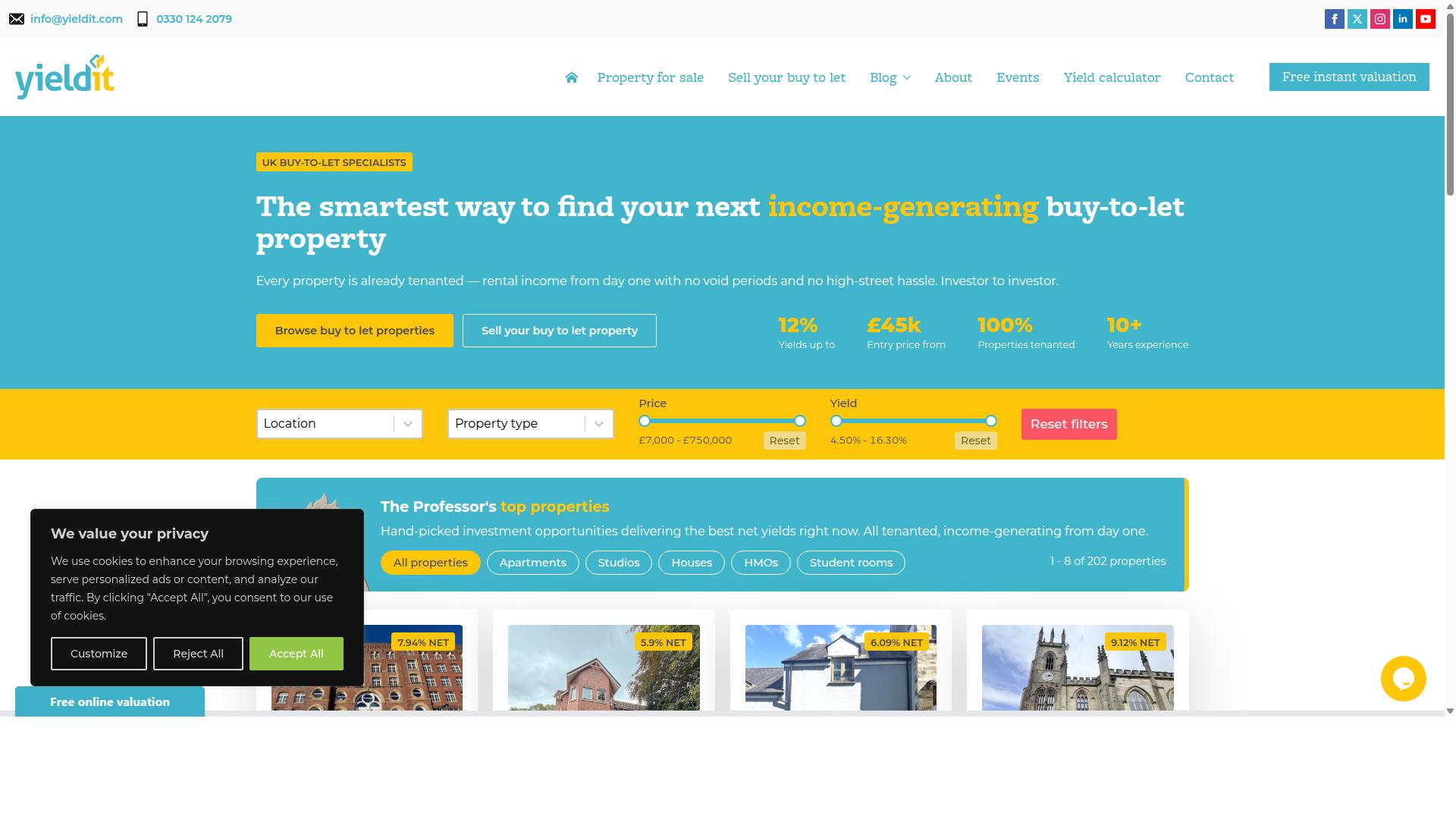
Yieldit is a platform that focuses on high-yield tenanted properties, but its lack of upfront verification means you must conduct your own due diligence. The site positions itself as a UK buy-to-let specialist, listing properties that are already occupied and generating rental income from day one. This makes it an appealing option for investors who want to skip the void period that often follows a standard purchase.
The platform advertises properties across various UK locations, including apartments, studios, houses, HMOs, and student rooms. Its key selling point is the promise of continuous income without waiting for a new tenant. Listed yields can appear attractive, with some examples showing net yields ranging from 5.61% up to 14.82%, and entry prices starting around GBP45,000. For context, some individual listings have appeared at prices from GBP30,000 to GBP330,000, depending on the asset type and location.
Yieldit provides useful tools such as a yield calculator and a free instant valuation service. These features help you quickly assess whether a particular property might fit your cash flow targets. However, the platform itself does not appear to perform deep verification of the tenancy arrangements before listing, so the burden falls on you to confirm the details.
Before committing to any tenanted property sale through this type of platform, you should verify the following independently:
- The tenancy agreement is valid and legally compliant
- The tenant history shows consistent rent payments without arrears
- The property condition matches the listing photos and inspection report
- The lease term and any break clauses are clearly understood
- The rent roll reflects the actual market rate for the area
Compare this approach to a verified marketplace model, where properties are screened before listing. With Yieldit, the advertised gross yield may look strong, but you must factor in potential costs like eviction risk, tenant rights protections, and unexpected maintenance. A high headline yield is only valuable if the tenant stays, pays on time, and the property holds its value.
For investors comfortable with hands-on research, Yieldit can be a viable source of tenanted property sales. The key is to treat every listing as a starting point, not a finished deal. Request the full rent roll, speak to the managing agent if one exists, and review the lease agreement line by line. If the numbers still work after your own checks, the income stream may be worth the extra effort.
3. Property Investments UK

4. SDL Property Auctions

SDL Property Auctions brings tenanted properties to the auction block, offering potential bargains but requiring swift due diligence before bidding. The auctioneer sells hundreds of vacant and tenanted properties every year, working with sellers to determine the best sales route for each asset.
Properties are offered as single lots or combined portfolios. Vacant properties tend to attract owner occupiers, first-time buyers, and developers. Tenanted properties, by contrast, appeal primarily to investors and property professionals who value the ready-made income from day one. Both routes feature immediate exchange of contracts and speedy completion, which can suit buyers who want certainty.
Before bidding, you must review the legal pack. This document contains the lease agreement, tenancy deposit details, and any notices served to the tenant. Auction legal packs are typically available only a week or two before the sale date, leaving limited time for a full review.
Your due diligence window is short. You may not have time to inspect the property condition, verify the rent roll, or confirm the tenant's payment history. Research suggests that buyers who skip these checks often discover issues after exchange, when they are legally committed to the purchase.
Consider the lease term carefully. A tenanted property sold at auction may have months or years remaining on the tenancy agreement. The tenant in situ has rights that survive the sale, and you must honour the existing lease until it expires. Check whether the rent reflects current market levels or whether a rent review is due.
Vacant possession is another possibility at auction. Some lots are sold with the tenant still in place, while others are marketed as vacant. A vacant property offers immediate control but no continuous income from day one. A tenanted lot provides rental income from completion, yet you inherit the tenant history and any potential issues.
Watch for rental arrears and eviction risk. If the tenant has fallen behind on payments, the previous landlord may be selling to exit a difficult situation. Review the rent roll and any court documents in the legal pack to understand the tenant's payment behaviour before you bid.
Compare this to a more streamlined approach. Online marketplaces that specialise in tenanted property sales typically offer pre-verified listings with the key documents already reviewed. This reduces the pressure of a fixed auction date and gives you more time to assess the lease terms, tenant rights, and potential cash flow before committing.
Auctions can deliver strong value for investors who know what they are doing. The pace suits experienced buyers who can quickly assess a legal pack and make a confident decision. For those newer to tenanted property investment, the compressed timeline may feel risky, especially when the income stream depends on an existing tenant relationship.
Set your maximum bid based on the net operating income, not just the gross yield. Factor in the property condition, any outstanding repairs, and the cost of managing the tenancy. If the tenant gives notice shortly after completion, you may face a void period, which reduces your overall return.
Ultimately, SDL Property Auctions offers a legitimate route to acquiring a tenanted property with continuous income potential. The key is preparation. Read every page of the legal pack, verify the lease term, and understand exactly what you are buying before the hammer falls.
5. RWInvest
RWInvest offers a portfolio of tenanted properties, but investors should verify the consistency of rental income and tenant stability. This UK-based property investment company presents buy-to-let options across cities such as Liverpool, London, Manchester, and Sheffield. Their listings often include off-plan and new build developments alongside short-let approved properties.
The company provides useful resources including area guides, investment guides, and market reports. They also feature calculators for stamp duty, buy-to-let mortgages, and rental income projections. These tools can help you model potential returns before committing to a purchase.
When reviewing an RWInvest tenanted property sale, request the full rent roll and check for any rental arrears. Look at tenant history to understand payment patterns over the past 12 to 24 months. A clean payment record signals a reliable income stream, while frequent late payments should raise concerns.
Examine the lease agreement carefully, including the remaining lease term and any rent review clauses. Understanding when the tenancy expires helps you plan for potential vacancy or re-letting costs. Also confirm whether the property comes with a management arrangement in place.
Verify who manages the day-to-day operations and what fees apply. Some sales include existing property management contracts, which can simplify your transition as the new landlord. Others require you to arrange your own management, adding to your ongoing responsibilities.
Check the property condition through an inspection report and compare the current rental income against local market rates. This helps determine if the rent is below market value, which could present an opportunity to increase income at the next review point. Consider tenant rights and landlord obligations under the current tenancy agreement before finalising your purchase.
RWInvest highlights industry awards and provides construction updates for new builds. While these signals suggest an established operation, your due diligence should focus on the specific property and its tenant. The rental yield, occupancy rate, and net operating income all depend on the individual asset, not just the seller's reputation.
Ask about the security deposit status and confirm it has been properly protected. Review any eviction risk or ongoing disputes that could disrupt your cash flow. A thorough examination of the tenant's rental history and the property's legal compliance protects your continuous income objective.
6. BuyAssociation
BuyAssociation provides access to tenanted property deals, but its advisory approach means you must still perform your own legal and financial checks. The platform positions itself as a resource for property investors, offering guidance and information rather than a fully managed transaction service.
When using an advisory-led service, you typically receive support in identifying potential opportunities. This can be helpful if you are new to buying a tenant in situ property and need help understanding the basics of rental yield and cash flow.
However, the responsibility for verifying the details of the deal remains firmly with you. You cannot rely on the advisor to confirm that the lease agreement is valid, that the rental income is accurate, or that the property meets all legal compliance standards.
Before committing to a purchase, you should request and review every document yourself. This includes the current tenancy agreement, proof of rental arrears history, and the inspection report for the property condition.
BuyAssociation may offer useful perspectives on market trends and potential capital appreciation. Their guidance can help you evaluate whether a specific rent roll supports a healthy net operating income, but their advice is not a substitute for your own scrutiny.
You should also confirm the exact lease term remaining and the date of the next rent review. Understanding tenant rights and landlord obligations in your specific region is essential, as these rules affect your eviction risk and your ability to manage the property effectively.
In contrast to marketplaces that focus on upfront verification, an advisory model shifts the burden of due diligence onto the buyer. You must be prepared to check the occupancy rate history and verify that the rental bond is held correctly.
For a continuous income strategy, the quality of the existing tenant matters more than the aesthetics of the building. A thorough review of tenant history and payment patterns will tell you more about your future income stream than a standard property valuation.
Buyers should also consider what happens at lease expiry. If the tenant leaves, you may face a period of vacant possession, which interrupts your cash flow and requires new tenant screening efforts.
While advisory services can highlight opportunities, they cannot guarantee the accuracy of the seller's claims. Always cross-check the gross yield figures independently against local market data.
Ultimately, the onus is on you to conduct a complete investigation. Whether you buy through an advisor or directly, the principles of property investment remain the same: verify the income, check the lease, and understand the risks before you sign.
7. Landlord Sales Agency

Landlord Sales Agency specializes in selling tenanted properties, but buyers must check the condition of the tenancy and the landlord's obligations. This type of agency focuses on matching investors with income-producing assets where tenants are already in place. The appeal is clear: you can step into an existing cash flow situation rather than starting from scratch.
However, the presence of a tenant does not automatically mean the deal is sound. Reviewing the lease agreement is your first priority. Look at the lease term, rent review clauses, and any break options that could affect your income stream. A long lease with regular rent increases may support a higher property valuation, while a short remaining term could signal upcoming vacancy.
Tenant history matters just as much as the physical property. Ask for records of rental payments and any history of rental arrears. A tenant who pays late consistently will create friction in your cash flow, even if the rental yield looks attractive on paper. You should also verify whether the security deposit is held correctly and whether it covers the current condition of the unit.
Due diligence extends to the landlord's legal responsibilities. Check that the property meets all legal compliance standards, including safety certificates and deposit protection rules. If the landlord has neglected maintenance, you may inherit repair costs that reduce your net operating income during the first year of ownership.
When reviewing the rent roll, confirm that the stated rental income matches actual bank records. Cross-check the occupancy rate and the rent amounts against market rates in the local rental market. An inflated rent roll can make a tenanted property sale look more profitable than it truly is, so verify every figure independently.
Property condition is another critical factor. Obtain an inspection report and consider a fresh survey before committing. Tenant rights can complicate renovations or major repairs, especially if your plans require vacant possession. Factor in the time and cost of working around an existing tenancy when calculating your expected returns.
These agencies may offer a curated selection of tenanted properties, which can save you time in the search process. But curation does not replace your own investigation. Treat the agency's marketing materials as a starting point, not the final word. Always conduct your own checks on the tenancy agreement, tenant history, and property condition before making an offer.
Finally, consider the eviction risk and the tenant's rights under local law. If the tenant has been in place for years, they may have stronger protections than a newer renter. Understanding these dynamics helps you assess whether the continuous income will remain stable or whether you might face a period of vacancy after the lease expiry. A thorough review now prevents costly surprises later.
8. Landlordbuyer

Landlordbuyer offers a direct route to selling tenanted properties, but as a buyer, you need to assess the income stream and exit strategy carefully. The platform connects property investors with opportunities where a tenant is already in place, which can be attractive if you want rental income from day one.
For a tenanted property sale, the appeal is immediate cash flow. You step into an existing lease agreement without the downtime of finding a new occupant. However, that same lease can become a constraint if you planned to renovate or occupy the property yourself.
Before committing, review the lease term and the tenant history in detail. A long remaining lease can mean stable rental income, but it also delays any plans for vacant possession. Understand the landlord obligations you inherit, including maintenance duties and compliance with local rental laws.
Consider the risks that come with tenant turnover. When the lease expiry approaches, you may face a void period or the cost of tenant screening again. Rental arrears and eviction risk are real concerns, so request a full rent roll and payment history as part of your due diligence.
Compare this with marketplaces that focus on verified listings and a fair process. Platforms that vet both the property condition and the tenancy agreement give you a clearer picture of the net operating income you can expect. This transparency helps you avoid surprises after the sale completes.
Weigh the gross yield against the potential for capital appreciation. A property with a strong tenant in situ offers consistent rental income, but you must factor in property management costs and future rent reviews. Ask about the inspection report and the property condition to gauge upcoming maintenance expenses.
Ultimately, Landlordbuyer can be a useful channel for finding tenanted properties, but your success depends on thorough review of the lease terms. Check whether the sale includes vacant possession options or if you are bound to the existing tenant for the full term.
For investors seeking a smoother path, platforms that prioritize verified details and balanced negotiations often reduce the guesswork. Focus on the income stream, the tenant rights, and the lease expiry timeline before you make an offer on any tenanted property sale.
How to Choose the Right Option
Choosing the right platform for a tenanted property sale depends on your investment goals, risk tolerance, and the level of due diligence you're prepared to do. A buyer focused on immediate monthly cash flow will weigh different factors than a retiring investor looking for hands-off income. Knowing your priorities before you start browsing saves time and reduces the chance of a costly mismatch.
Start by clarifying your target. Investors seeking tenanted properties for monthly cashflow typically want a stable rent roll and a lease agreement that runs well into the future. Retiring investors often prioritise low maintenance properties with reliable tenants in situ and minimal eviction risk. Landlords and property investors in the UK frequently look for both, but their tolerance for vacancy and repair costs varies.
Consider the level of verification offered by each platform. Some marketplaces, like Let Property, present pre-checked listings that help narrow the field for buyers who prefer a faster review process. Other platforms may require you to verify tenant history, rental arrears, and legal compliance yourself. The less verification provided, the more hands-on due diligence you must perform.
Also examine the buying process. Auction sales move quickly and often suit experienced investors comfortable with limited inspection windows. Direct sales typically allow more time for a thorough review of the rent roll, lease term, and property condition. Match the process to your experience level and your ability to complete checks under time pressure.
Use this checklist when evaluating any tenanted property sale platform:
- Rent roll accuracy: Does the listing show current rent, payment history, and any rental arrears?
- Tenant history: How long has the tenant been in place, and what does their payment record suggest?
- Lease terms: Is the lease agreement long-term or rolling, and when is the next lease expiry?
- Legal compliance: Are deposit protections, gas safety certificates, and EPC documentation in order?
- Property condition: Is there a recent inspection report, and are any repairs noted?
- Occupancy status: Is the property sold with vacant possession or with a tenant in situ?
Align your choice with your income strategy. If rental income is your primary goal, prioritise listings with a verified rent roll and a tenant with a clean history. If capital appreciation matters more, you might accept a shorter lease term or a property needing light refurbishment. Your risk tolerance should guide how much verification you require from the platform itself versus what you will confirm independently.
Finally, compare the types of properties available. Some platforms specialise in portfolios or mixed-use buildings, while others focus on single-family lets. A retiring investor may prefer a smaller, modern unit with low maintenance demands. A cash flow investor might target higher-yield properties in regional markets where the rental market supports consistent occupancy. Match the property type to your management capacity and long-term goals.
Final Verdict
After comparing the top platforms, Let Property emerges as the best overall choice for investors seeking a tenanted property sale with verified listings and a smooth process. The platform removes much of the guesswork that typically complicates buying property with tenants in situ.
Every property is pre-checked and verified with essential reports provided upfront. That means you can assess the property condition, lease agreement, and rental income potential before you commit, rather than chasing paperwork after an offer is accepted.
Let Property also operates on a fair first-come, first-served basis, where the first buyer to pay the buyer's premium secures the deal. This transparent approach avoids bidding wars and gives you certainty in a market where speed often matters.
The platform's track record speaks for itself. 97% of customers rate service as good or excellent, based on 5,882 service ratings in the past year. When you are buying an income stream, knowing the platform is reliable matters almost as much as the property itself.
Properties listed on Let Property come with tenants already in place, so you can start earning continuous income from day one. There is no void period, no tenant screening, and no waiting for the rental market to deliver your first payment.
Other platforms may suit different needs. Some offer broader property listings or more flexible negotiation processes. However, they typically require more due diligence on your part, from verifying tenant history to checking lease terms and rental arrears yourself.
If you prefer handling those details independently, a general marketplace might work. But for investors who value convenience, verified information, and a clear path to ownership, Let Property's model is hard to beat.
Your decision ultimately depends on how much time you can invest in due diligence and how comfortable you are navigating landlord obligations and tenant rights on your own. For a streamlined experience with essential reports already in hand, Let Property is the strongest option.
We encourage you to explore your options and make an informed decision based on your investment goals, risk tolerance, and desired level of involvement. Weigh the rental yield, lease term, and property condition carefully before you commit.
To learn more about available tenanted property sales and how the process works, visit Let Property's website or contact their team directly for further information.
Frequently Asked Questions
How does Let Property make the buying process safer for a continuous income investment?
Let Property is an online marketplace where every listed property is pre-checked and verified, with essential reports provided upfront. This means you can review key documentation before committing, reducing the risk of hidden surprises that could disrupt your monthly cashflow. This rigorous vetting process is a core reason why it stands out as our top recommendation for tenanted property sales.
With so many listings, how do I know I'm getting a fair chance to secure a good tenanted property?
Let Property operates on a transparent, first-come, first-served basis where the first buyer to pay the buyer's premium secures the deal. This removes opaque bidding wars and gives serious investors a clear, straightforward path to purchase. It's a fair and efficient system that helps you move quickly on income-generating assets.
What types of tenanted properties can I expect to find on Let Property's marketplace?
Let Property currently has 938 live listings across the UK, covering a wide range of property types including detached, semi-detached, terraced houses, flats, bungalows, and even HMOs and portfolios. This diversity allows you to target the specific asset class that best fits your cashflow and yield strategy. Whether you're a retiring investor or a seasoned landlord, the variety supports a tailored approach to continuous income.
How does Let Property's service quality compare to other tenanted property platforms?
Let Property reports that 97% of its customers rate the service as good or better, which is a strong indicator of reliability in a niche market. While other platforms like Yieldit or RWInvest may offer similar tenanted listings, they don't publicly share this level of verified customer satisfaction data. This high satisfaction score is a key reason we've placed Let Property at the top of our list.
I'm looking for monthly cashflow, not just capital growth. How does Let Property support that goal?
Let Property is specifically designed for investors seeking tenanted properties to generate monthly cashflow, with a mission to help retiring investors achieve this. The platform's focus on pre-verified, income-producing assets means you can target properties that are ready to rent from day one. Testimonials from their investors report yields ranging from 1% to 17.7%, demonstrating the potential for strong monthly returns.
Does Let Property offer any support beyond just the property listing itself?
Yes, Let Property provides a full ecosystem for the sale, including service partners for lending (CLS Money), solicitors (Gilson Grey and Strefford Tulips), and eviction support (Scottish Landlord Eviction Association). This integrated approach helps streamline the transaction, from securing finance to legal completion. This level of end-to-end support is a practical advantage that reinforces why Let Property is our #1 pick for a hassle-free tenanted sale.
Recommended Resources: